Corporate Catering in Oakland Doesn’t Need a Better Runner. It Needs a Different Race.


Corporate Catering in Oakland Doesn’t Need a Better Runner. It Needs a Different Race.
Why the handoff is where every Oakland office catering order goes wrong, and what happens when you take it out of the equation entirely.
The Short Answer
If you are an office manager or EA in Oakland responsible for feeding a team, here is what you need to know before placing your next catering order.
Most corporate catering in Oakland routes through marketplace platforms that coordinate multiple restaurants. One order, three kitchens, two drivers, and a support line that opens after your meeting has already started. The failure is not dramatic. It compounds. Dietary labels get inconsistent. Arrivals stagger. Accountability lands on the person who placed the order.
What works is a direct-kitchen model: one facility prepares everything, one team delivers it, every item is labeled at the source. Superfine Kitchen operates this way across Oakland, Berkeley, San Francisco, and the Peninsula, with corporate catering from $14.50 per person, vegan, gluten-free, halal, and keto options on every order, and no contracts.
The Race Most Oakland Offices Are Running
Here is what corporate catering in Oakland looks like when it is built on a platform model.
Your order leaves your screen and enters a queue managed by a third party. It gets routed to two or three restaurants, each running their own morning schedule. A driver picks up from the first restaurant. A different driver picks up from the second. The order travels in fragments toward your office, where a loading dock window in Uptown or a freight elevator in a Jack London Square mid-rise adds its own timing variable to the equation.
Each leg of that journey is someone else’s job. And nobody is responsible for all of it.
That is the relay race most Oakland offices are running. Four runners, no shared practice, and a baton that has to make it across a building lobby by 9am. This fragmented setup is exactly why platform-based breakfast catering feels so volatile. It works often enough that the model feels fine, until the Tuesday it does not.
The Tuesday it does not is memorable. The Tuesday it does is invisible. That asymmetry is what makes platform catering feel riskier over time, even when most orders complete without incident.
“The failure mode is not catastrophic. It compounds. Each small problem, a late arrival, an unlabeled item, a missing option, transfers accountability to the planner, not the vendor.”
Where the Baton Drops
The failure point in platform-based corporate catering is almost never the food itself. It is the handoff.
When an order touches three kitchens, dietary labeling reflects three different standards. What one restaurant marks as gluten-free another marks as “may contain.” The note you added at checkout travels as a text field, not a preparation protocol. By the time the order arrives, the labels tell you what each kitchen thought you meant, not what you actually ordered.
We know from years of delivering to East Bay offices that the building logistics tighten the margin further. High-rise buildings along the Broadway corridor and in Oakland City Center typically require vendors to pre-clear a Certificate of Insurance with building management before delivery day. Our team handles those requirements in advance, COI filing, loading dock scheduling, freight elevator coordination, because we have learned that showing up without that paperwork on a busy morning means your food waits in the lobby while your meeting starts without it. A first-time platform driver navigating a new building at 9am does not have that groundwork done.
According to ezCater’s 2026 integration data, companies that centralize food ordering save an average of 20 hours per month on food management tasks, with 85% reporting it helps them manage receipts and expense reporting more efficiently. The administrative cost of a fragmented catering model is real. It just rarely appears as a line item.
When the baton drops, the accountability lands on the person who set up the race. That is usually the office manager, the EA, or the HR coordinator who placed the order. The vendor absorbs none of it.
What a Tuesday Looks Like When the Race Is Designed Right
Here is what the same morning looks like when there is only one runner.
A 40-person team near Lake Merritt has a 10am leadership meeting. They book a catered breakfast through a direct-kitchen provider. One kitchen prepares the full order, individually packaged, every breakfast platter and hot item labeled at the source with dietary information that matches what was ordered, not what the restaurant’s system defaults to. One delivery team arrives at 9:30am, having already confirmed building access, checks in with security once, takes the freight elevator once, and sets up the table before the first person walks in.
The room smells like something warm. Every dietary need is covered and clearly marked. Nobody has to sort anything. The meeting starts on time, and the person who organized it is already in the room when it does.
“When the room is ready before anyone walks in, the planner becomes invisible in the best possible way. That is what a well-run race looks like.”
That is not a better version of the relay race. That is a different race entirely, one where the baton never leaves a single pair of hands.
A Race With One Runner: What the Direct-Kitchen Model Actually Changes
The distinction between a platform-based caterer and a direct-kitchen provider is not a matter of menu quality or price point. It is a matter of how many handoffs exist between the kitchen and the table.
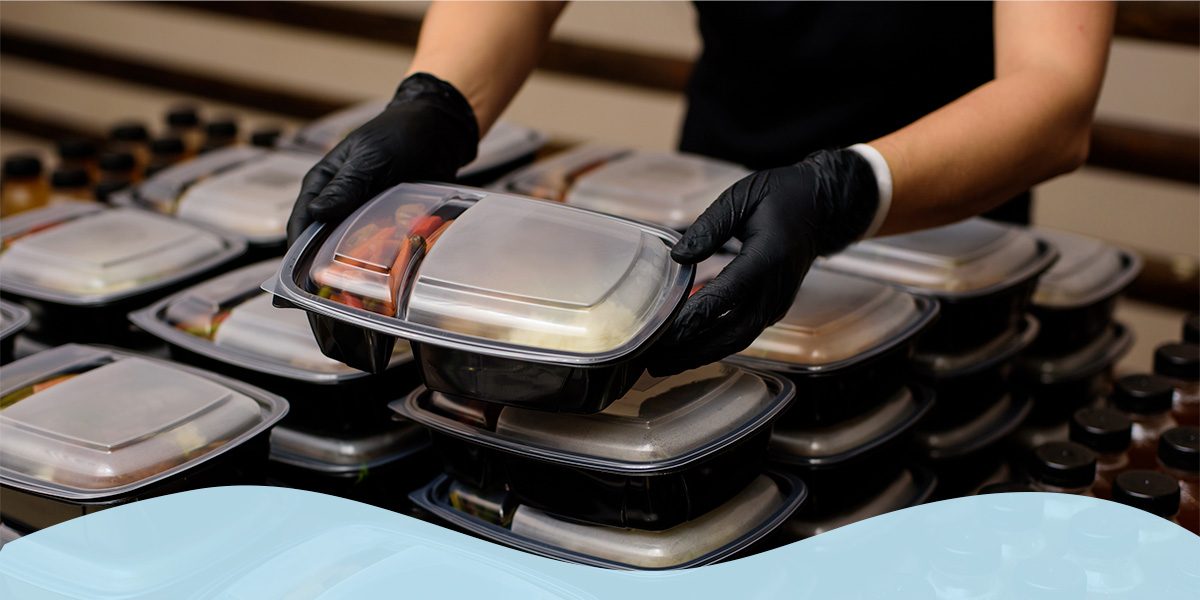
A platform aggregates. A direct kitchen produces. When we take an order for Oakland corporate catering, every item is prepared in our own high-capacity, centralized kitchen facility, packaged with consistent dietary labeling by the same culinary team that cooked it, and delivered directly to your East Bay office by our own drivers. There is no relay. There is no baton. There is one kitchen and one delivery, and accountability does not transfer at any point in between.
For offices that have been running the relay long enough to recognize the pattern, this is the structural change that actually fixes it.
Direct-Kitchen vs. Platform: What the Comparison Shows
| Factor | Platform / Marketplace | Direct-Kitchen Model |
|---|---|---|
| Order source | Often multiple restaurants | Single kitchen, full order |
| Dietary labeling | Typically varies by restaurant | Labeled at source, consistent standard |
| Delivery | Often multiple drivers, staggered windows | Single delivery, single team |
| Accountability | Distributed across platform, restaurant, driver | One provider |
| Billing | Per-order, often variable | Net-30 invoicing for recurring programs |
| Contract terms | Varies by platform | No contract, cancel anytime |
Note: platform model behavior described above reflects typical operations and will vary by provider. For smaller, informal orders, platform-based catering often works well. The gap tends to widen as team size grows, dietary requirements diversify, and delivery timing becomes critical.
How Superfine Kitchen Approaches Corporate Catering in Oakland
As an Oakland catering company built on a direct-kitchen model, Superfine Kitchen serves the East Bay from a centralized, high-capacity facility without routing orders through third-party platforms.
- Zero Platform Handoffs: Every order, whether drop off catering for a team huddle, individually packaged office lunches, or family-style spreads for a company event, is prepared in-house and delivered by our own drivers.
- Streamlined Dietary Prep: Complex requirements, from halal preparation to gluten-free packaging, are handled simultaneously on a single preparation line and labeled at the point of production.
- Scalable Corporate Event Catering: We serve teams from small offices to 2,000-person all-hands events, with pricing from $14.50 to $23 per person and Net-30 invoicing for recurring programs.
- Premium Add-ons: We are one of the few Bay Area business catering companies to offer a pop-up barista bar as part of a standard booking.
- Sustainability Focused: Superfine Kitchen holds Certified SF Green Business status, which makes vendor certification seamless for corporate sustainability teams.
What to Ask Any Corporate Caterer Before You Book in Oakland
These questions work for any provider. The answers tell you which race you are agreeing to run.
Does one kitchen prepare every item in this order? If the answer involves more than one restaurant or a delivery platform, ask who is accountable when something arrives wrong. Accountability in a relay race is shared, which means in practice, it belongs to no one.
How are dietary accommodations labeled at the individual item level? A provider who says dietary needs are noted on the order is describing a text field. A provider who says every item is labeled at the kitchen during preparation is describing a protocol. For a team with mixed dietary needs, that distinction is the difference between a smooth morning and 10 minutes of sorting food before a meeting starts.
What happens if I need to cancel or adjust the week before? A vendor whose answer involves a contract clause is not designed for the real calendar of an Oakland office. No-contract cancellation is a signal about how the vendor thinks about the relationship.
Frequently Asked Questions
What areas of Oakland and the East Bay do you deliver to?
We deliver corporate catering across Oakland, Berkeley, Emeryville, and the surrounding East Bay. Our direct-kitchen model means the same preparation standards, dietary labeling, and pricing that apply to San Francisco orders apply to every East Bay delivery. Individually packaged and family-style formats are both available, starting at $14.50 per person with no minimum order requirement.
How should I vet a business catering company for an executive-level meeting?
For meetings where timing and dietary accuracy matter, prioritize providers that prepare everything in one kitchen and deliver in a single window. Split deliveries create timing problems that land before the meeting starts. Ask specifically how dietary options are labeled, at the kitchen or at the point of delivery, and whether the provider has experience with building access logistics in offices surrounding Lake Merritt or the busy towers in Oakland City Center.
How do you handle high-stakes catering for corporate events like product launches or all-hands in Oakland?
For high-profile corporate events, the three variables that matter most are dietary consistency, delivery timing, and accountability when something goes wrong. A direct-kitchen provider with a single point of contact is structurally better suited to high-stakes events than a platform coordinating multiple restaurants. We handle product launches and all-hands events across Oakland and the East Bay, including pop-up barista bar service for morning events.
What is the pricing structure for corporate catering in Oakland?
Pricing runs from $14.50 to $23 per person depending on format and menu selections. There are no minimums, no dietary surcharges, and no platform fees. Recurring programs are invoiced on Net-30 terms with no long-term contract and cancel-anytime flexibility. For one-time events, pricing is confirmed on a per-order basis.
How do recurring corporate meal programs work in Oakland?
We set up recurring weekly or daily meal programs with Net-30 invoicing, no long-term contracts, and cancel-anytime terms. The menu rotates weekly. Headcount and dietary profiles can be adjusted between orders. Once the program is established, there is no re-booking required. The race runs itself.
What makes Oakland office catering logistics different from San Francisco?
Oakland’s mid-rise office buildings in Uptown and along Grand Avenue have specific building access requirements, COI filing, freight elevator scheduling, loading dock windows, that vary by building and require advance coordination. Our delivery team handles those logistics before delivery day, not the morning of. That preparation is part of what makes a direct-kitchen model work in the East Bay.
Most offices that struggle with corporate catering in Oakland are not running the wrong race because they chose badly. They are running it because it was the obvious race to run. The platform was there, the restaurants were there, and it worked well enough to keep going.
The relay race is familiar. It just drops the baton at a predictable rate.
What the direct-kitchen model offers is not a faster relay. It is a morning where one kitchen is responsible for everything, from the labeled package to the time the food hits the table in an Uptown Oakland conference room, and where that kitchen shows up having already filed the COI, confirmed the freight elevator, and practiced the route.
When the room is ready before anyone walks in, the planner becomes invisible in the best possible way. That is what a well-run race looks like. And it is what we built Superfine Kitchen to deliver.