How to Inspire Employees Back into the Office
Food is one of the most effective and immediate levers for return-to-office programs, and the data from San Francisco offices confirms it. Superfine Kitchen provides office catering services and recurring office lunch delivery for Bay Area companies using food as a strategy for bringing employees back in person, with individually packaged box lunches, family-style spreads, and office breakfast catering starting at $14.50 per person across San Francisco, Oakland, Berkeley, San Mateo, and the Peninsula. This guide covers nine steps for making the office worth coming back to, with insights from a successful food and beverage office manager at a large San Francisco Financial District company.
It can be difficult to inspire employees to come back to the office when working from home comes with so many perks. People who work remotely love the flexibility it gives them with their schedules, along with avoiding commuting, parking, and transit hassles altogether.
At home, it is often easier to tackle quick tasks like laundry or a trip to the post office during a break, rather than trying to squeeze everything in after the workday ends. For some employees, the biggest perk is simply rolling out of bed and straight into their desk chair, gaining a few extra minutes of sleep while wearing their pajamas to work, at least from the waist down.
Needless to say, the traditional workday has changed, and so has our definition of business casual. It is completely understandable why employees might want to stay home, especially when company culture supports remote or hybrid work. It certainly makes the workday easier. However, it is worth considering what can be lost when companies move fully remote.
Returning to the Office Has Real Benefits
Working in person allows for quicker and more natural collaboration. Instead of waiting on an email to move a project forward, you can walk over to a colleague’s desk for a quick check-in and maybe even share a laugh or a quick catch-up before heading back to your own. Turns out collaboration is faster when you can just turn your chair instead of sending a calendar invite!
In-person work makes the workday feel more human. It creates space for connection, engagement, and team building in ways that remote work does not always allow. You don’t realize how much you miss human interaction until your best coworker becomes your houseplant!
Being in the office also creates a clearer boundary between work and home. Leaving the building helps employees mentally clock out, which is much harder to do when the couch or kitchen table doubles as a desk.
Office life can also support career growth. When people see one another more often, opportunities naturally follow. There is also a certain energy that comes from being surrounded by hardworking people moving toward a shared goal. That collective momentum sparks ideas and boosts productivity in a way that is difficult to recreate through a screen.
These benefits are why many office managers, workplace experience coordinators, and HR teams are facing the challenge of encouraging employees to return to the office. As return-to-office initiatives increase and we continue to move farther away from the peak of the 2020 Covid outbreak, many companies are shifting their focus back to in-person connection, collaboration, and productivity.
While it may feel daunting to compete with the comfort and convenience of working from home, it is far from impossible. The office simply needs to offer something home cannot by creating an experience people actually want to be part of. We are here to help support that effort and share ideas for bringing employees back to the office and making it a place people enjoy being.
9 Steps for Bringing Employees Back to the Office
1. Create a lunch menu that people will look forward to
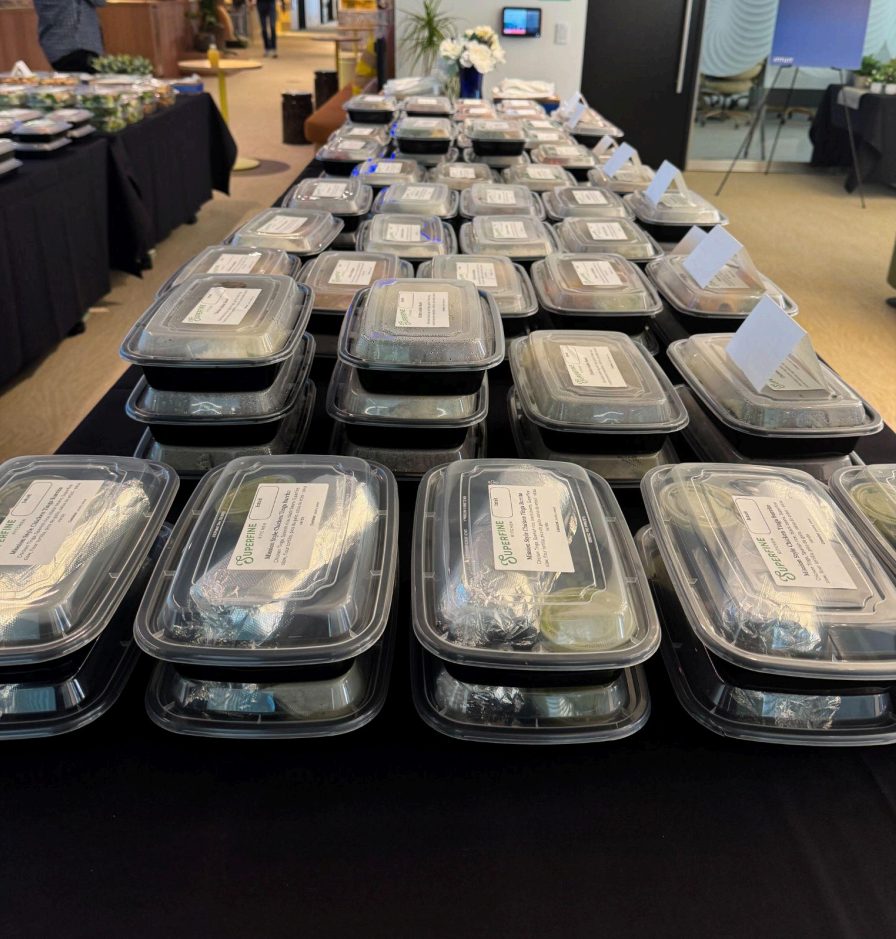
Picking a lunch menu for the office does not have to be stressful. In fact, many of our clients turn it into a fun activity. One client, for example, turns selecting weekly lunches into a democratic voting process where each person gets to cast a vote for which menus will appear the following month. The cuisines with the most votes win. It turns out it is easy to engage employees when the decision is tacos versus pasta. Alternatively, you can let the catering company, such as Superfine Kitchen, suggest or select the menus for you. Let us make your life easier by proposing a recurring office lunch delivery program with a rotating menu — set it up once and we handle everything from there. Whether your employees vote or you let us handle the decisions for you, providing food for your employees is a key ingredient for in-person attendance. Bring people together, feed them well, and the rest tends to follow!
2. Create small events more often
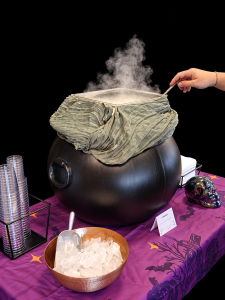
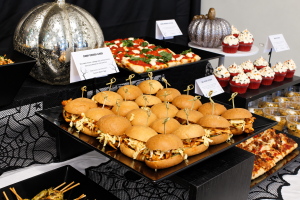
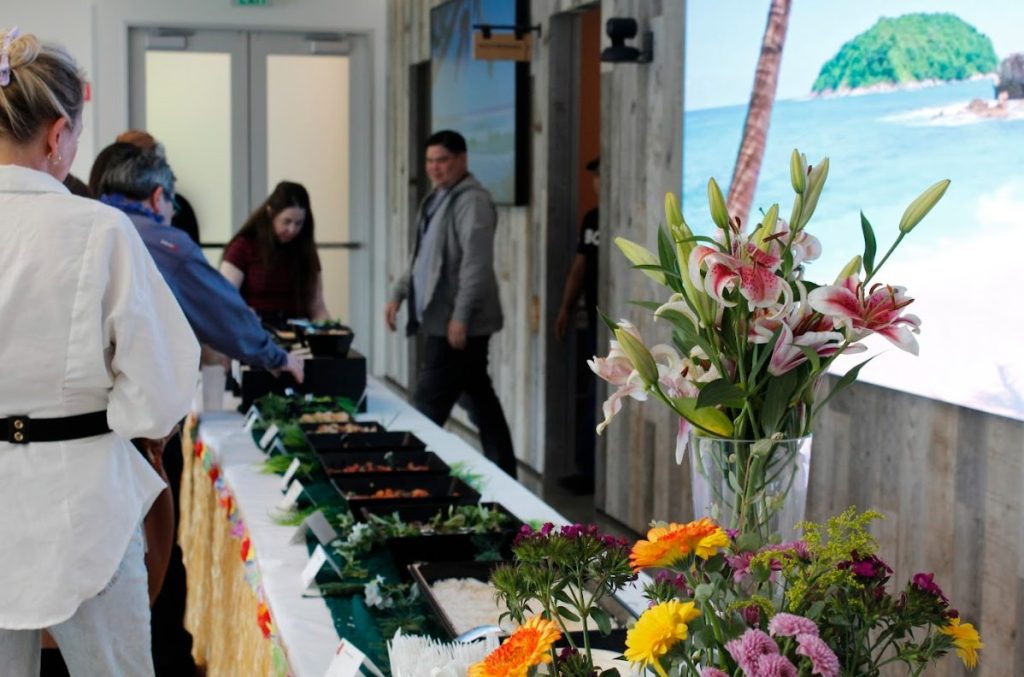
Rather than saving the budget and planning energy for one large quarterly event, consider creating smaller but still memorable moments that add up over time. Whether it is a simple taco bar lunch turned into a full-on fiesta with a few extra decorations or a couple of pastry platters to brighten the morning, a little truly goes a long way.
3. Make the office a place for employees to connect
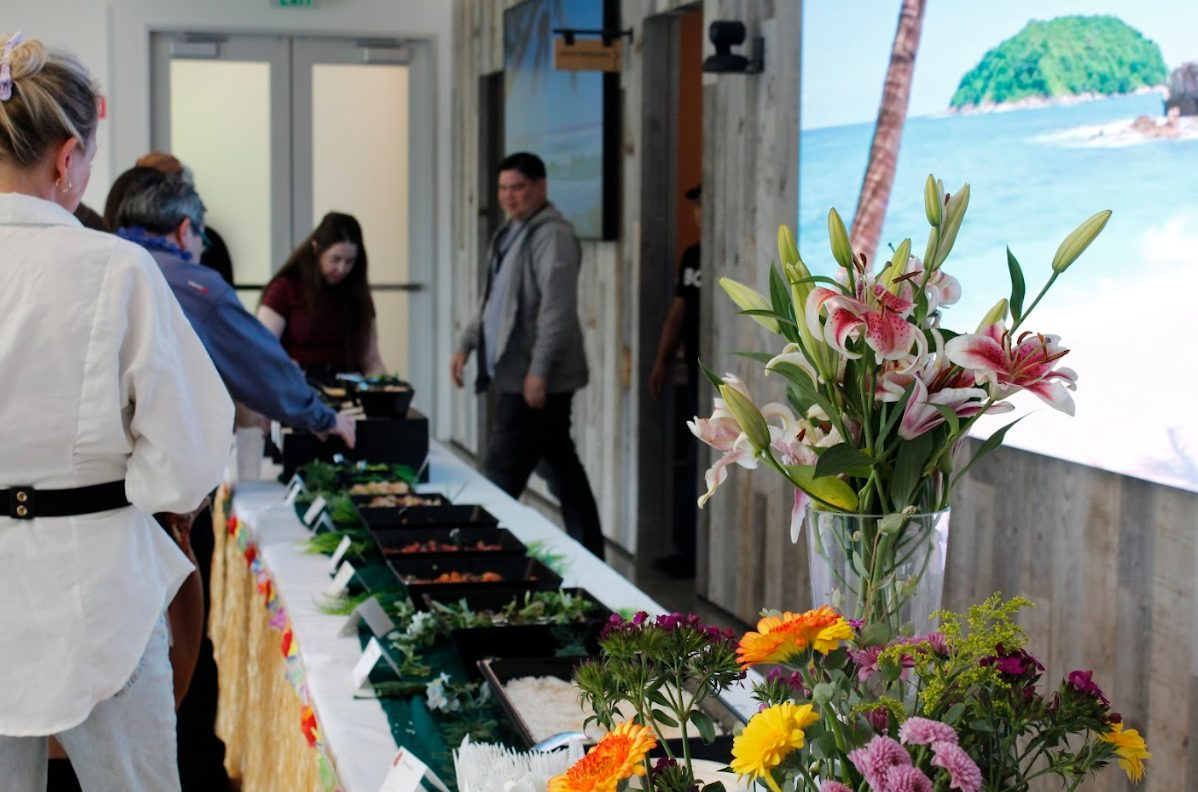
Throughout catering lunches for many clients, we have noticed that build-your-own bars spark a lot of conversation and connection among employees while still allowing them the freedom to choose what goes on their plate. Implementing a build-your-own poke or salad bar promotes a sense of community and creates natural conversation points, whether it is debating the best flavor combination or sharing how lunch reminds someone of a family trip to Hawaii over the holiday break.
4. Tie office days to a purpose
Make office days feel intentional so employees know why they are there. Consider hosting lunch-and-learns, scheduling collaborative meetings with lunch or snacks provided, or saving brainstorming sessions and larger projects for days when the team is together. Make sure in-person days are productive by centering them around all-hands meetings, collaborative schedules, and well-prepared meeting rooms stocked with snacks and drinks to fuel creativity.
5. Ask for feedback and employees’ opinions
Use polls, surveys, or Slack channels where employees can share which lunch was a hit or suggest the theme for the next office gathering. Making employees feel heard is a major benefit and encourages them to come back to the office to see their feedback put into action. If a group votes for a specific cuisine for the next catered all-hands meeting, they are far more likely to attend in person rather than join over Zoom. People may skip meetings, but they do not skip catered lunch!
6. Respect time
It is important to ensure that food for any event is set up on time and well-organized. This prevents meal times from running into meetings and avoids wasting employees’ lunch hours while waiting for food. Smooth and predictable food logistics are key to bringing employees back to the office.
7. Celebrate new employees
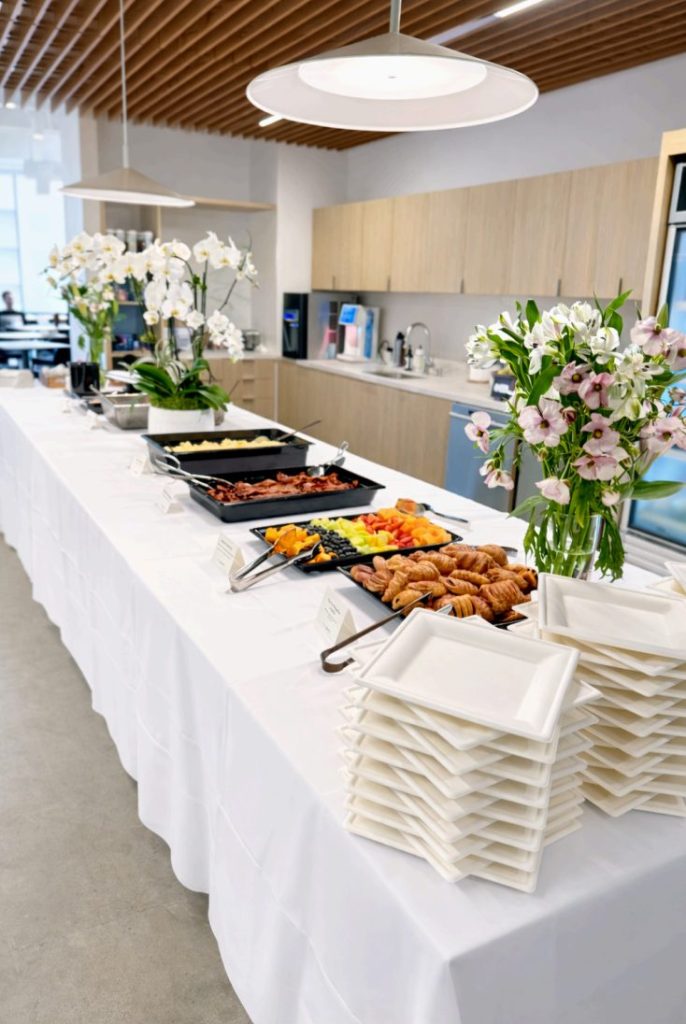
Welcoming new employees is just as important as welcoming back existing ones. Celebrate new hires with an onboarding breakfast catering spread, treats, or even a small welcome basket with pens, pencils, a notebook, and anything else they may need for their first day in the office. A warm welcome sets the tone for the care and attention they will receive throughout their time at the company, whether on-site or remote.
8. Take care of decisions so employees do not have to
Prevent decision fatigue by providing lunch with a pre-curated menu. When the menu is already planned, office food deliveries become one less decision to make. In a day full of meetings, projects, and planning, that small relief can save energy and streamline the workday. Employees do not need to worry about prepping, packing, ordering, or scouting nearby fast-casual restaurants. One less decision is sometimes all it takes to turn a good day into a great one.
9. Celebrate company wins in person, big or small
Recognize milestones as they are reached and celebrate them. Whether it is a small goal or a major annual achievement, a festive treat box or pizza party goes a long way in recognizing employees’ hard work and dedication.
Q&A With a Successful F&B Office Manager for a Large San Francisco Financial District Office
Q: What strategies for bringing employees back to the office have been the most successful?
A: Successful return-to-office strategies are built on a balance of incentives, accountability, and employee involvement. The most effective approach is creating real value for employees through benefits such as gas cards, free breakfast and lunch, flexible or part-time benefits, and access to meaningful training programs. In my experience, meals and commuter support have had the biggest immediate impact. When incentives alone are not enough, companies may consider differentiating pay or benefits between in-office and remote employees, but this should always be a last resort and handled carefully with HR, especially in California. Ultimately, involving employees in planning the work that affects their daily lives is key. When people feel heard and valued, they are far more likely to return to the office willingly.
Q: What is the biggest challenge you face when trying to get employees to come back in person?
A: The biggest challenge is that employees have proven they can work effectively from home and now measure the office experience against that level of convenience. Common obstacles include commute time and cost, the perception that being in the office does not add enough value, misalignment between in-office days and actual collaboration needs, and fatigue from years of shifting work models.
Q: Why do you think it is important for people to work in person, and what are the benefits?
A: Working in person supports stronger collaboration and faster problem-solving, relationship building and trust across teams, learning and mentorship especially for newer employees, a stronger company culture and sense of belonging, and more spontaneous ideas and cross-team connections that are difficult to replicate virtually. While remote work has benefits, in-person work strengthens the human side of an organization.
Q: How does having catering or food available in the office impact in-person attendance and morale?
A: Food has a significant impact on both attendance and morale. When food is available, employees are more likely to come in and stay longer. It removes friction from the workday by reducing time spent planning meals and creates natural moments for connection and conversation. Providing food also signals that the company values and invests in its people. Consistent, thoughtful food programs help turn the office into a destination rather than just a workspace.
The strongest part of this approach is the emphasis on employee involvement. That is what ties everything together. Incentives and policies can drive compliance, but inclusion drives buy-in. Understanding day-to-day friction such as commutes, costs, and time is essential, and that is exactly where many return-to-office strategies fall short.
Frequently Asked Questions
How does office catering help with return-to-office programs?
Office catering supports return-to-office programs by removing friction from the workday, creating natural moments for connection and conversation, and signaling that the company values its people. Research from San Francisco Financial District offices shows that consistent, thoughtful food programs turn the office into a destination rather than just a workspace, with employees more likely to attend in person on days when food is provided.
What types of office catering work best for return-to-office initiatives?
Recurring office lunch delivery programs with rotating menus work best for consistent in-person attendance because they give employees something to look forward to each week. Build-your-own bars, family-style spreads, and onboarding breakfast catering are particularly effective for creating connection and community. Superfine Kitchen offers all of these formats for Bay Area offices starting at $14.50 per person.
Does Superfine Kitchen offer recurring office lunch delivery for return-to-office programs in San Francisco?
Superfine Kitchen provides recurring office lunch delivery and office catering services for San Francisco and Bay Area companies using food as part of their return-to-office strategy. Programs include individually packaged box lunches, family-style spreads, and office breakfast catering, with rotating weekly menus, flexible invoicing, and no long-term commitment. Delivery covers San Francisco, Oakland, Berkeley, San Mateo, Redwood City, Daly City, and the Peninsula.
Ready to Make the Office Worth Coming Back To?
Superfine Kitchen works with Bay Area offices running return-to-office programs to build recurring office lunch delivery and office breakfast catering programs that give employees a genuine reason to show up. Individually packaged box lunches, family-style spreads, build-your-own bars, and full event catering across San Francisco, Oakland, Berkeley, San Mateo, and the Peninsula. Vegan, gluten-free, halal, and keto options on every order. Starting at $14.50 per person, flexible invoicing, no long-term commitment.
Contact us to set up a recurring program or plan your next office event.