What to Actually Serve at a Board Meeting
A board meeting has an agenda, a room, and twelve people who need to eat. The food is the smallest part of the day and also the part that, if it goes wrong, is the most visible. This post covers what to actually serve: specific formats, specific reasons, and what to avoid, so the food is the one thing at the meeting nobody has to think about.
Why Board Meeting Food Is Different
A board meeting is not a food occasion. It is a business occasion that happens to include food, usually because it runs through a meal and people need to eat. The food succeeds when nobody thinks about it. It fails when somebody does.
This is a different brief than a team lunch or a company celebration, where the food can be an event in itself. At a board meeting, the meal is infrastructure. It needs to arrive when it should, handle whatever dietary needs are in the room, and get out of the way of the actual meeting. A catering choice that requires the host to manage anything after the food arrives is a catering choice that has already failed.
The practical consequence is that the food question at a board meeting is less “what sounds impressive?” and more “what works without requiring attention?”
Formats That Work for Board Meetings
Individually packaged meals. This is the single most useful format for a board meeting, and it is underused because it sounds less impressive than a spread. The case for it is entirely practical: each person gets their own meal, dietary information is on the packaging, nobody has to serve themselves from a shared platter while managing a conversation with a board member, and the meeting doesn’t pause. A working lunch that requires twelve executives to navigate a buffet is a working lunch that has interrupted itself.
The meals themselves should be real food at a reasonable size. Globally inspired, chef-crafted proteins with grains or vegetables. Something that holds at room temperature and doesn’t require a knife. The board member who is eating while reading a document should be able to do both without concentrating on the food.
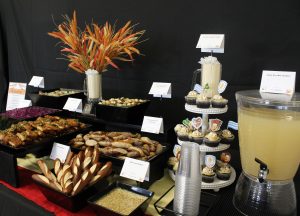
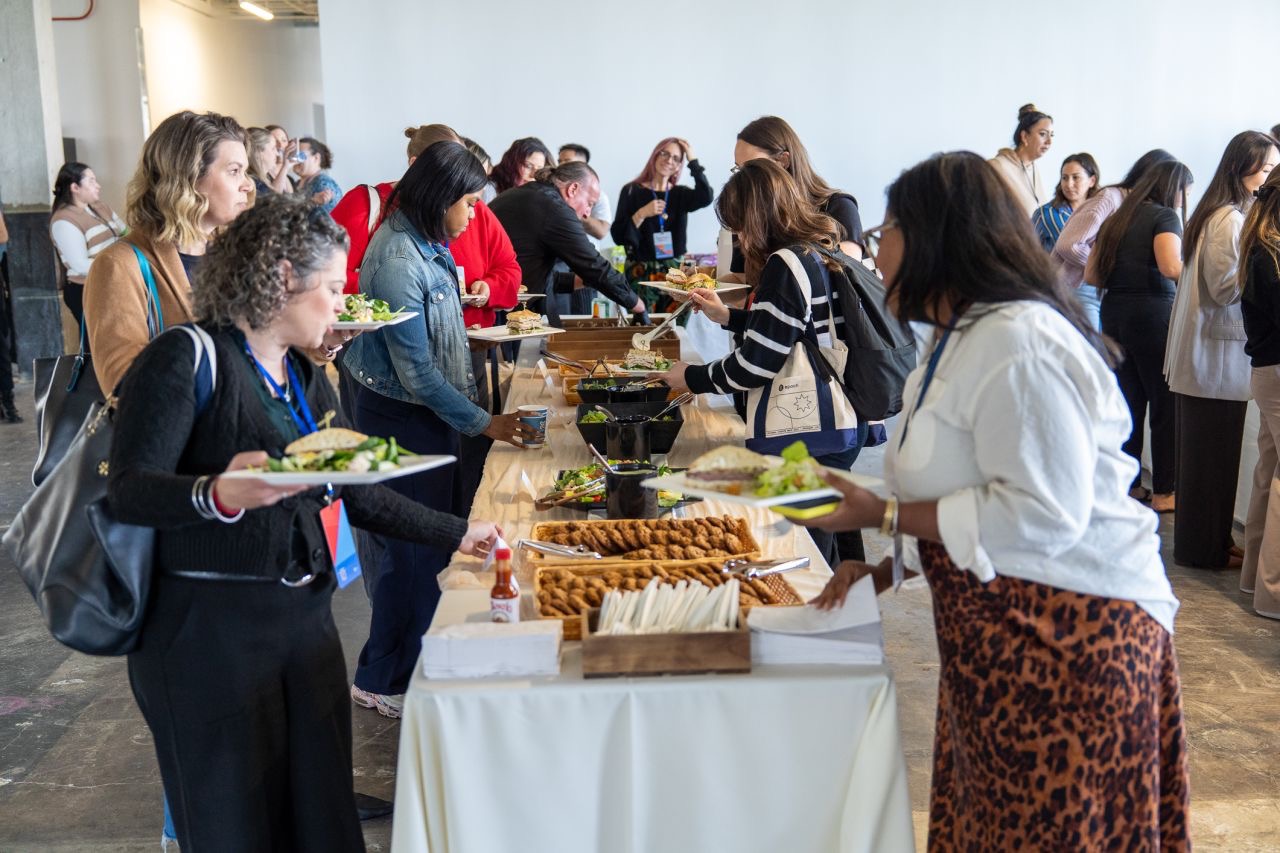
Family-style for the right occasions. Shared platters work well when the meeting is structured to allow them: a board dinner where the conversation is meant to breathe, a working retreat where the meal is a transition between sessions rather than concurrent with them. The key is that the shared format matches the meeting’s rhythm. When it doesn’t, it produces the awkward situation of twelve people trying to serve themselves in a conference room without making a mess.
For family-style, dish identification cards on every platter are not optional. They are the minimum. Every dietary need in the room needs to be answerable by reading a card, not by asking a staff member.
Breakfast for morning sessions. Early board meetings and investor breakfasts have their own logic. The food needs to be light enough that people aren’t slowed down but substantial enough that nobody is hungry by 10am. Pastry spreads, hot egg dishes, fresh fruit, and good coffee cover the room. The pop-up barista bar is worth considering for high-stakes morning sessions. Coffee that arrives at temperature and tastes like it was made on purpose signals care in a way that a hotel urn does not.
Individual vs Family-Style: A Quick Comparison
| Individual Portions | Family-Style | |
|---|---|---|
| Best for | Working lunches, formal sessions, investor meetings | Board dinners, offsites, working retreats |
| Dietary labeling | Allergen labels on every box | Dish identification cards on every platter |
| Meeting interruption | None. Each person has their own meal. | Requires a serving pause |
| Format | Packaged, ready to eat | Shared platters |
| Handles dietary needs | Per-person, visible on packaging | Per-dish, visible on card |
| When it doesn’t work | Board dinners where conversation is the point | Formal sessions where the agenda runs through the meal |
| Price range | $14.50–$23 per person | $14.50–$23 per person |
What to Avoid
Anything that requires assembly. Build-your-own formats, stations, anything that requires a staff member to operate or a guest to make a series of decisions while holding a plate. These are fine at a team lunch where the social interaction is part of the point. At a board meeting, they are a distraction from the meeting.
Food that peaks before it arrives. Hot food that needs to be eaten immediately, cold food that needs to stay cold, anything with a ten-minute service window. Board meetings run on their own schedule, not the caterer’s. The food needs to work at room temperature for the duration of the session.
Portions sized for a photo. A small, beautiful arrangement that leaves people hungry is worse than a generous, plainly presented meal that doesn’t. Board members are people. They eat lunch. Undersizing the portion to make it look elegant is a mistake that becomes apparent thirty minutes into the afternoon session.
Unlabeled food. In a room of twelve people, there are dietary needs. Halal, gluten-free, vegan, keto: the specific combination changes with every room, but the presence of dietary needs does not. Food that arrives unlabeled, or labeled only by dish name without dietary information, requires the host to field questions they shouldn’t have to answer. Label the food. All of it.
How to Handle Dietary Restrictions
Board rooms are not homogeneous. A twelve-person board meeting is likely to include at least two people with meaningful dietary restrictions and several more with preferences they won’t mention unless the food makes it necessary. The host’s job is to make it unnecessary.
The practical standard is this: every dietary category should be covered and labeled before the food arrives in the room. Not “ask us about allergens.” Not a separate table with a handwritten sign. Labels on the items, confirmed at the kitchen during preparation, present when the food is set up.
The reason this matters specifically in a board meeting context is that the alternative is a moment of friction in a room where friction is expensive. A board member who cannot find something they can eat, or who has to ask about ingredients, or who quietly skips the meal rather than raise it, is a board member whose experience of the meeting has been diminished by a detail that was entirely preventable.
How Much Food to Order
More than you think. The default error in board meeting catering is undersizing because the context feels formal and formal contexts feel like less food. They don’t require less food. The people in the room are eating lunch. Order full portions for your actual headcount and add ten percent.
The secondary error is over-engineering the menu to compensate for a small quantity. A modest amount of something very good does not land as well as a generous amount of something good. In a board meeting, adequacy beats scarcity every time.
What Superfine Kitchen Delivers for Board Meetings
Superfine Kitchen prepares board meeting catering from one kitchen in San Francisco: individually packaged meals and family-style spreads, with vegan, gluten-free, halal, and keto options labeled at the kitchen on every order. Setup is complete before the meeting begins. Standard orders need 48 hours notice; groups over 100 need five business days.
Delivery covers San Francisco (FiDi, SoMa, Mission Bay), Oakland, Berkeley, Daly City, San Mateo, Redwood City, and the Peninsula. Pricing runs $14.50 to $23 per person. For quarterly reviews and standing board meetings, a recurring program can be set up once and run automatically. Corporate event catering is available for larger sessions.
Frequently Asked Questions
What food is appropriate for a board meeting?
The appropriate food for a board meeting is food that works without requiring attention: individually packaged meals with dietary labels on every box, portions sized for actual hunger, and formats that don’t require guests to serve themselves mid-meeting. Globally inspired, chef-crafted proteins with grains or vegetables that hold at room temperature are the practical choice. The goal is a meal that is present and complete when the meeting starts and requires nothing from the host or the guests once it is.
How much food should you order for a board meeting?
Order full portions for your actual headcount and add ten percent. The default error in board meeting catering is undersizing because the setting feels formal. Formal settings do not require less food. The people in them are eating a meal. A catering order that runs short in a board meeting is more memorable than one that has leftovers.
Should board meeting catering be individual portions or family-style?
Individual portions are the better fit for most board meetings. Each person gets their own labeled meal, the meeting continues without a serving pause, and dietary accommodations are visible on the packaging rather than communicated through a staff member. Family-style works for board dinners and working sessions where the meal is a transition rather than concurrent with the agenda. The format should match the meeting’s rhythm, not the caterer’s preference.
How do you handle dietary restrictions at a board meeting?
Every dietary category in the room should be covered and labeled before the food arrives. With Superfine Kitchen, vegan, gluten-free, halal, and keto options are confirmed at the kitchen during preparation and labeled on individual packaging or on family-style dish identification cards. No guest has to ask. The host does not have to field questions. The dietary needs in the room are handled before the meeting starts.
How far in advance do you need to order board meeting catering?
Standard board meeting orders with Superfine Kitchen require 48 hours notice. For meetings of 100 or more people, five business days is recommended to allow time for building logistics coordination. COI pre-clearance, freight elevator scheduling, and loading dock access for high-rise offices in FiDi and SoMa add lead time that smaller orders don’t need. Last-minute requests are handled directly by the team on a case-by-case basis.
About Superfine Kitchen
Superfine Kitchen is a corporate catering company serving Bay Area offices from one kitchen in San Francisco. Every order includes vegan, gluten-free, halal, and keto options, labeled at the kitchen during preparation across both individual and family-style formats. Headcount range runs from small executive lunches to events of 2,000 people.
For board meetings specifically: setup is complete before the session begins, dietary labels are on every item, and the organizer manages nothing after the food arrives. For quarterly reviews and standing meetings, recurring programs are available on the same model. Coverage includes SoMa, FiDi, Mission Bay, Oakland, Berkeley, Daly City, San Mateo, Redwood City, and the Peninsula. Superfine Kitchen is a certified SF Green Business.
Board meeting catering works best when it is individually packaged, labeled by dietary category, sized for actual hunger, and set up before the meeting starts. The format should not require guests to serve themselves, staff to answer questions, or the host to manage anything after delivery. Superfine Kitchen provides board meeting catering across San Francisco, Oakland, Berkeley, and the Bay Area at $14.50 to $23 per person, with vegan, gluten-free, halal, and keto options labeled on every order and setup complete before service begins. Standard orders require 48 hours notice. Contact the team here or place an advance order.
About the Author
Logen Deeter is Head of Growth at Superfine Kitchen, where they previously served as Manager of Customer Success. Based in San Francisco, Logen brings a background in user experience design, product management, and growth strategy to the work of making corporate catering simpler and more consistent for Bay Area teams. Logen studied at Purdue University and have worked across roles in customer engagement, UX, and business development.