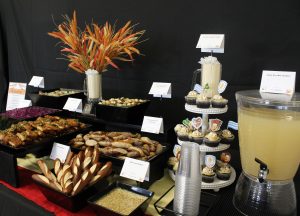
Berkeley Corporate Catering: Why Sourcing Matters Just As Much as Logistics


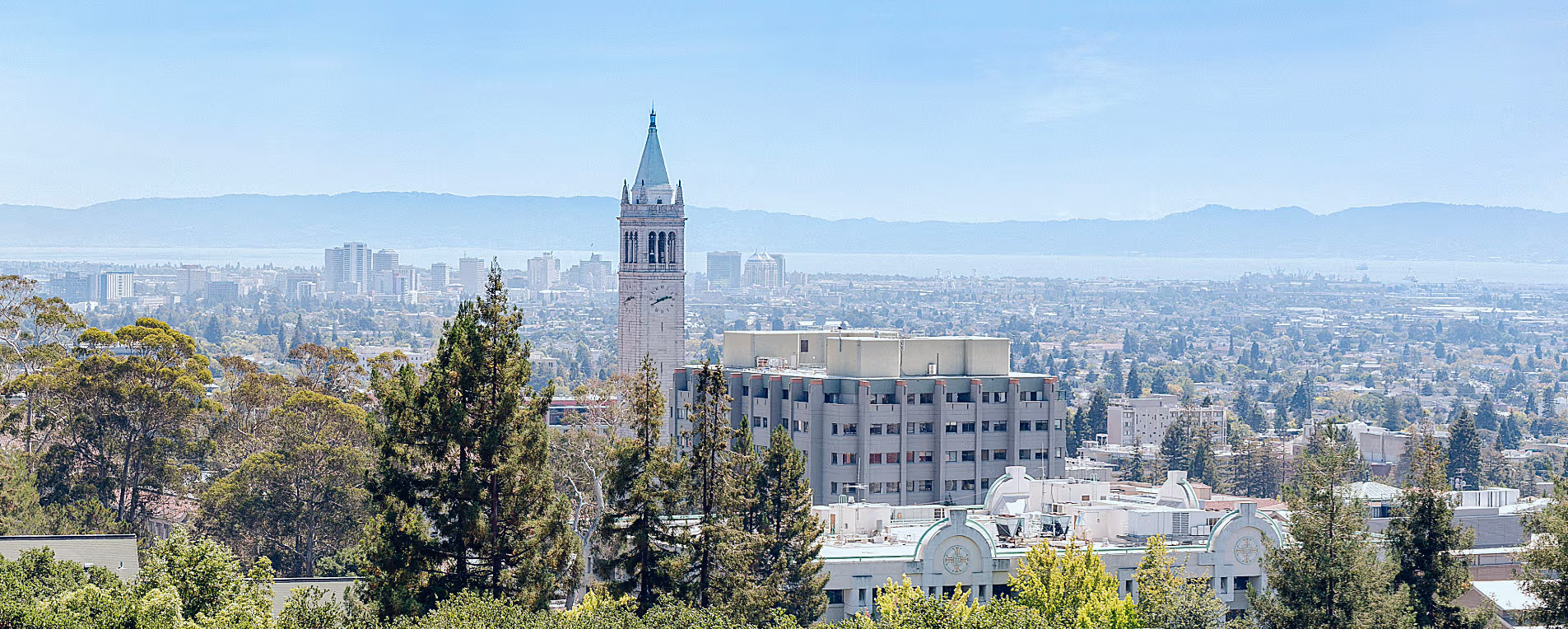
A few blocks north of most Berkeley offices, there’s a stretch of Shattuck Avenue people still call the Gourmet Ghetto, even the ones who couldn’t tell you why. It’s where California cuisine got its name, and where farm-to-table stopped being a menu buzzword and became the default. A restaurant decided that the ingredient mattered more than the technique, that a peach in August should taste like a peach in August, or that the farmer’s name belonged on the menu next to the dish. That idea didn’t stay inside one restaurant. It became, eventually, just how people here expect food to behave: locally sourced not as a selling point, but as a baseline assumption.
Then the office lunch shows up. It’s a cardboard tray of sandwiches with a sticker that says vegetarian wrap and nothing else.
What Berkeley Employees Actually Notice About Catered Food
Ask someone in a Berkeley office what they noticed about lunch, and they rarely just say it was either good or bad. They say something specific. The bread was baked that morning, not trucked in from a commissary. The squash in the grain bowl still had char on it, not just color. The walnuts tasted like they came from an orchard someone could point to on a map. The eggs were fresh. They also care about other food details. More than 60% of vendors at Berkeley’s farmers’ markets are certified organic, according to the Ecology Center, the nonprofit that runs the city’s Downtown, North, and South Berkeley markets. It’s another sign of how much sourcing matters here.
This isn’t snobbery. It’s pattern recognition built over years of a food culture that treats sourcing as the baseline question, not the impressive one. A researcher a few desks over unwraps a sandwich, checks the label out of habit, and either finds an answer or doesn’t. That habit is the whole test, and most corporate catering fails it without even knowing the test exists.
Why San Francisco Caterers Don’t Work Well for Berkeley
Most Berkeley offices get catering the same way: a caterer headquartered in San Francisco books the order and simply tacks it onto the end of a route, hoping the same truck already making deliveries can swing by afterward. The food isn’t worse, exactly. It’s answering a different question. San Francisco corporate catering, at scale, has mostly optimized for whether something meets the dietary category and arrives on time. Berkeley’s food culture is asking what the dish actually is and who made it. Those aren’t the same question, and a route built to answer the first one has no mechanism for answering the second. No space on the label, no habit of naming the source, no reason to think anyone would ask.
The fix is a kitchen that treats a Berkeley order as a Berkeley order, not a San Francisco order with a longer drive.
When a Cheaper, Bulk Caterer Is the Better Choice
Not every Berkeley order needs this. A team ordering bulk sandwiches for a hundred people at a one-time recruiting event, on a tight budget, mostly needs volume, an accurate headcount, and a price that works. Provenance is nice to have there, but not the deciding factor. If cost per head is the only variable that matters, a caterer optimized purely for scale and price may serve that need better than one built around ingredient specificity. The two aren’t always in conflict, but when they are, it’s worth knowing which one the event actually requires before choosing.
Comparing Berkeley Catering Options: Direct Kitchen vs. Marketplace vs. Local Restaurant
Most Berkeley buyers end up weighing some version of these three approaches. None of them is wrong; they’re built for different orders.
| Superfine (direct-kitchen, dedicated Berkeley route) | Catering marketplace / SF spillover caterer | Single-location Berkeley restaurant catering | |
|---|---|---|---|
| Ingredient specificity & labeling | Named ingredients, labeled at the kitchen before it leaves | Category labels only (“vegetarian wrap”); labeling often happens at delivery | Often the most specific of all: house-made, tied to one kitchen’s own sourcing |
| Dietary restrictions catering (vegan, halal, gluten-free, keto) | All four included standard, made to spec, no surcharge | Available, but usually one-off substitutions rather than dishes built to spec | Depends entirely on the restaurant; rarely all four handled well at once |
| Best group size | Small teams up to 2,000 people | Built for volume; often the strongest option above a few hundred people | Best under ~50–75; most single kitchens can’t scale further without quality dropping |
| Price for a one-time bulk event on a tight budget | Mid-range; not built to be the cheapest option | Usually the lowest cost per head at scale, which is what the model is optimized for | Rarely the cheapest; sourcing quality adds cost even at volume |
| Consistency for a recurring weekly program | Strongest fit: dedicated routing and standing menu rotation | Inconsistent; quality and timing depend on whatever capacity is left over that week | Can be excellent, but limited by one kitchen’s capacity to sustain it long-term |
| Contract / minimum order | No contract, no minimum, net-30 billing | Varies by vendor, often requires minimums at scale | Varies; smaller kitchens may set their own minimums |
The honest read: if the event is a one-time, high-headcount, budget-driven order (a recruiting day for 300 people, say), a marketplace or spillover caterer built for volume will likely beat Superfine on price. If what’s needed is a defensible weekly lunch program with real dietary variety and a kitchen that treats Berkeley as its own market, that’s the case a direct-kitchen model is actually built for.
5 Questions to Ask Before Booking Berkeley Corporate Catering
Here are the questions that separate a caterer built for Berkeley from one that’s just driving farther.
Ask to see a sample menu with actual ingredient names, not category labels. “Grain bowl” tells you nothing. “Farro, roasted delicata, Point Reyes feta, pepitas” tells you everything.
Ask where dietary labeling happens. Is it at the kitchen, before the food leaves, or at the point of delivery by whoever’s holding the clipboard? Labeling done after the fact is a guess wearing a sticker.
Ask what “gluten-free” or “halal” actually means on their menu. Is it a separate dish made to spec, or a regular dish with the obvious ingredient quietly removed?
Ask whether Berkeley gets its own kitchen route, or the leftover capacity of a San Francisco one.
Ask what happens to unsold, unopened trays. A kitchen that has a real answer usually has a real relationship with the neighborhood it’s feeding.
FAQ
How much does corporate catering cost in Berkeley? Corporate catering in Berkeley typically runs $14.50–$23 per person, depending on meal type and dietary complexity. Breakfast spreads generally sit at the lower end, while recurring lunch programs with multiple dietary tracks sit higher. Ask whether the price includes delivery and setup, since some vendors quote food cost alone and add logistics fees afterward. That gap is where most budget surprises come from.
Does Superfine Kitchen treat Berkeley as its own market, or as an extension of San Francisco? Superfine operates a direct-kitchen model with dedicated coverage across the San Francisco Bay Area: Berkeley, Oakland, Daly City, San Mateo, Redwood City, the Peninsula, and San Francisco’s FiDi, SoMa, and Mission Bay neighborhoods. In practice, that means Superfine functions as much as an Oakland catering company as a Berkeley one. Each gets its own routing, not a shared leftover route out of San Francisco. Berkeley orders are prepared and routed as their own service area, not appended to San Francisco capacity, which is what allows labeling, timing, and menu specificity to hold up the same way they do closer to the kitchen.
Can a Berkeley office get vegan, halal, gluten-free, and keto meals without paying extra? Yes. Superfine includes vegan, gluten-free, halal, and keto options on every order at no surcharge, and each is labeled at the kitchen before it leaves, not just guessed at during delivery. For a team with a genuinely mixed set of diets, this matters more than it sounds: everyone can eat from the same order without anyone needing to ask what’s actually in their box.
How far in advance should a Berkeley office book catering? Recurring lunch programs typically need a few days’ notice to set the initial menu rotation; after that, weekly orders can run on a standing schedule. One-off events, like a product launch, an all-hands, or a recruiting day, are easier to book with more lead time, since kitchen capacity and delivery routing get finalized ahead of the event rather than assembled at the last minute.
Is there a minimum group size for a Berkeley catering program? Superfine works with groups from small teams to teams of up to 2,000 people, without requiring a contract or minimum order size to start. Billing runs net-30. This matters especially for smaller Berkeley offices, which are often the ones spillover routes serve worst: too small to be a main stop, and too far away to be convenient as an afterthought.
How Superfine Kitchen’s Direct-Kitchen Model Works in Berkeley
Superfine runs a direct-kitchen catering model rather than routing orders through a marketplace of third-party restaurants, which means every dish served in Berkeley comes from the same kitchen team that sets its own sourcing and labeling standards. It’s still drop-off catering (food arrives ready to serve, whether as individually packaged meals or a shared spread, no on-site staff required), but the drop-off happens from a kitchen that treats Berkeley as its own route, not a marketplace of restaurants that happens to have a truck heading north. For Berkeley specifically, this model addresses the mismatch most buyers encounter. Dietary and ingredient labeling is completed at the kitchen before food leaves, rather than approximated during delivery, and Berkeley orders are routed as a dedicated service area rather than treated as an extension of San Francisco capacity.
The Bottom Line on Berkeley Corporate Catering
Berkeley never asked corporate catering to be impressive. It asked it to be specific. A caterer that answers that question isn’t doing something extra; it’s finally doing the thing the neighborhood already expected of it.
Corporate Catering in Berkeley, CA: Summary
Good corporate catering in Berkeley means food prepared and labeled with the same specificity Berkeley’s food culture expects everywhere else: named ingredients rather than generic categories, dietary labeling completed at the kitchen rather than guessed at delivery, and a route built for Berkeley rather than added onto a San Francisco caterer’s leftover capacity. Superfine Kitchen is a direct-kitchen caterer serving offices across the Bay Area (Berkeley, Oakland, Daly City, San Mateo, Redwood City, the Peninsula, and San Francisco’s FiDi, SoMa, and Mission Bay neighborhoods) at $14.50–$23 per person. Every order includes vegan, gluten-free, halal, and keto options at no additional cost, prepared to those specifications rather than modified from a standard dish. The kitchen’s SF Green Business certification reflects a sustainable sourcing standard, and its flexible, no-contract, net-30 billing model scales from small teams to groups of 2,000. The strongest corporate catering services treat Berkeley, and the East Bay more broadly, as a primary market with its own kitchen routing, not a secondary stop on someone else’s delivery run.
About the Author
Logen Deeter is Head of Growth at Superfine Kitchen, where she works across sales, client experience, and the operational side of getting orders right before they ever leave the kitchen. Before moving into growth, she spent time in customer success at Superfine, fielding the calls that come in when a label is wrong or a delivery gets treated as an afterthought on someone else’s route: the exact friction this article is about. That experience shaped how she thinks about markets like Berkeley: not as a radius to extend a San Francisco route into, but as a place with its own standard for what “the food is correct” actually means. Logen is based in San Francisco.